Artist Statement
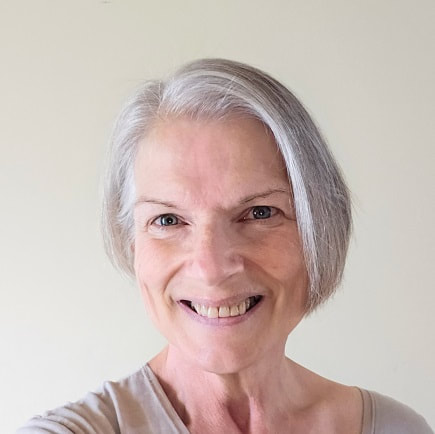
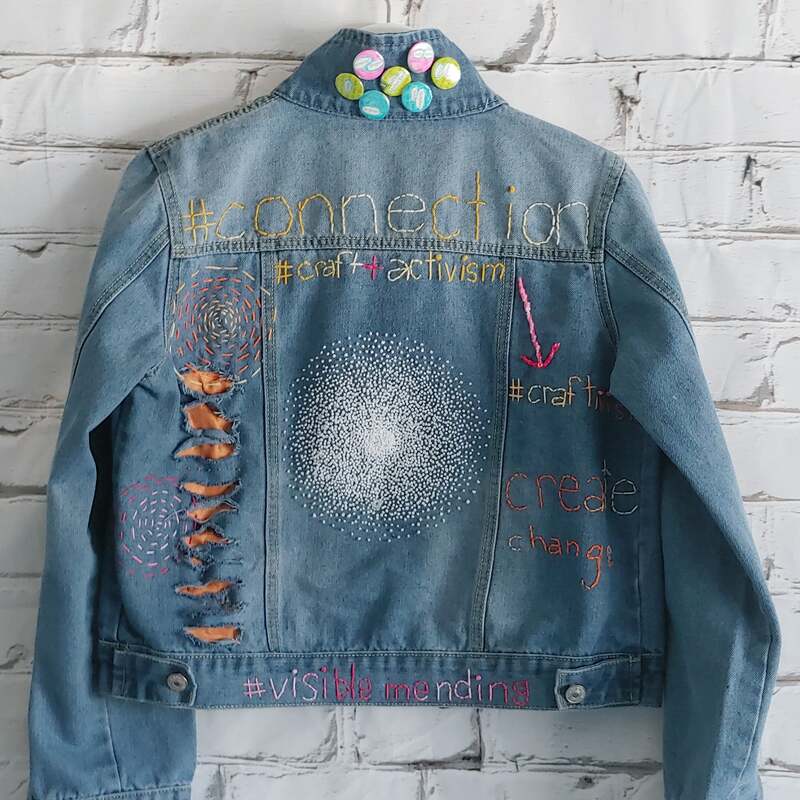
As a zero-waste textile artist, I engage in the transformative act of visible mending and craftivism. My name is Sandra Clarke, and through my artwork, I seek to intertwine creativity with sustainability, fostering a connection between the aesthetic and the ethical.
In a world marked by fast fashion and disposable culture, I embrace a different approach. Each piece I create is a testament to the beauty of repair and the value of resourcefulness. Utilizing textile scraps, reclaimed materials, and traditional techniques, I breathe new life into worn garments and forgotten fabrics.
My artistic process is deeply rooted in mindfulness and consideration for our planet's well-being. I believe in the power of art to inspire change, and through my practice, I aim to advocate for environmental consciousness and social justice. This intersection of art and activism forms the essence of my craftivism.
Drawing inspiration from the natural world, I infuse my work with a laid-back bohemian style, evoking a sense of wanderlust and connection to the Earth. Each stitch tells a story, a narrative of resilience and adaptation, echoing the cycles of nature and the interconnectedness of all living beings.
Through my artwork, I invite viewers to pause, to reflect, and to embrace the beauty of imperfection. In a society obsessed with perfection and mass production, I celebrate the unique character and history embedded within each textile. My creations serve as reminders of the value of slow, mindful making in a world that often moves too fast.
Ultimately, my goal as an artist is to spark conversations, to challenge norms, and to inspire others to join me on the journey towards a more sustainable and compassionate future. Through the simple act of mending, we can stitch together a world that honours both beauty and sustainability, one stitch at a time.
In a world marked by fast fashion and disposable culture, I embrace a different approach. Each piece I create is a testament to the beauty of repair and the value of resourcefulness. Utilizing textile scraps, reclaimed materials, and traditional techniques, I breathe new life into worn garments and forgotten fabrics.
My artistic process is deeply rooted in mindfulness and consideration for our planet's well-being. I believe in the power of art to inspire change, and through my practice, I aim to advocate for environmental consciousness and social justice. This intersection of art and activism forms the essence of my craftivism.
Drawing inspiration from the natural world, I infuse my work with a laid-back bohemian style, evoking a sense of wanderlust and connection to the Earth. Each stitch tells a story, a narrative of resilience and adaptation, echoing the cycles of nature and the interconnectedness of all living beings.
Through my artwork, I invite viewers to pause, to reflect, and to embrace the beauty of imperfection. In a society obsessed with perfection and mass production, I celebrate the unique character and history embedded within each textile. My creations serve as reminders of the value of slow, mindful making in a world that often moves too fast.
Ultimately, my goal as an artist is to spark conversations, to challenge norms, and to inspire others to join me on the journey towards a more sustainable and compassionate future. Through the simple act of mending, we can stitch together a world that honours both beauty and sustainability, one stitch at a time.
2024
Mississauga Arts Council Grant 2024 Craftivism and Visible Mending Masterclass on YouTube

Build Your Creative Business on YouTube
Visual Arts Mississauga April 2024
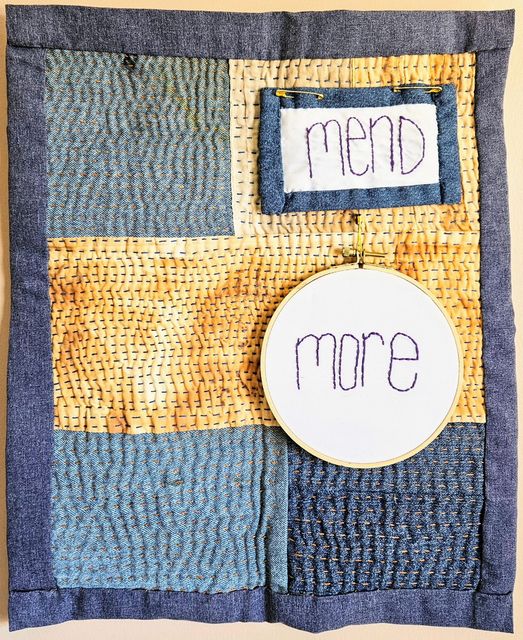
World Art Day Exhibit • MEND MORE by Sandra Clarke
2023

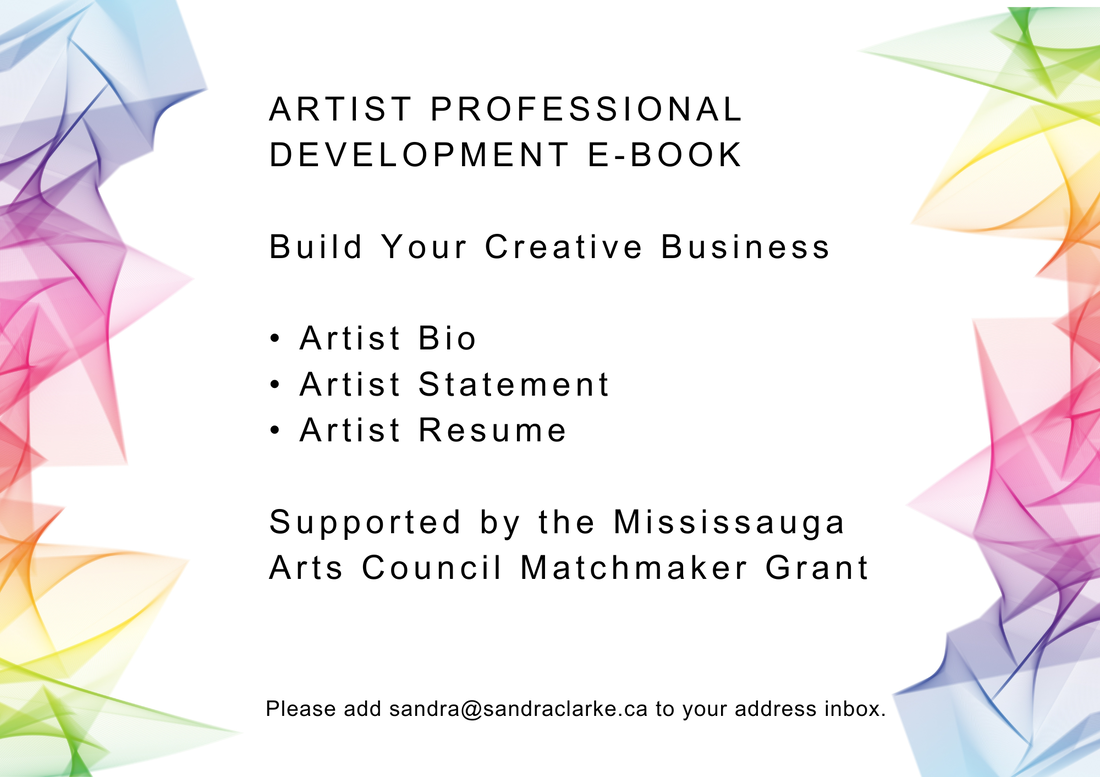
E-book PDF below, click SCRIBD
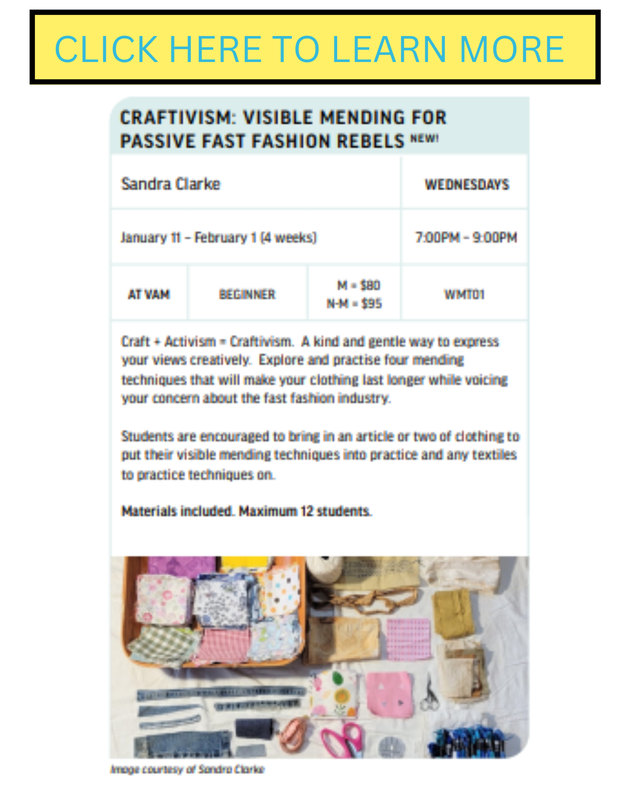
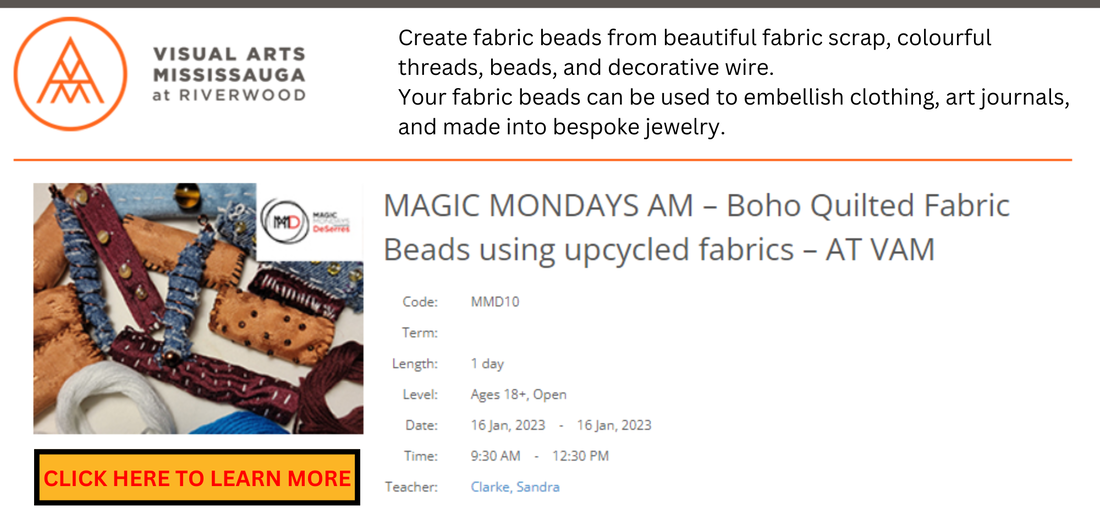
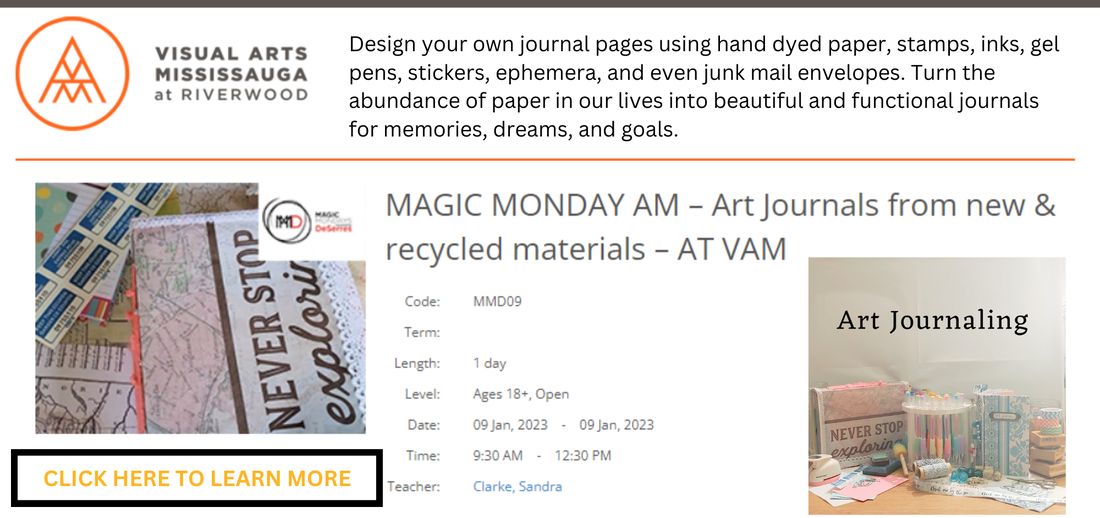
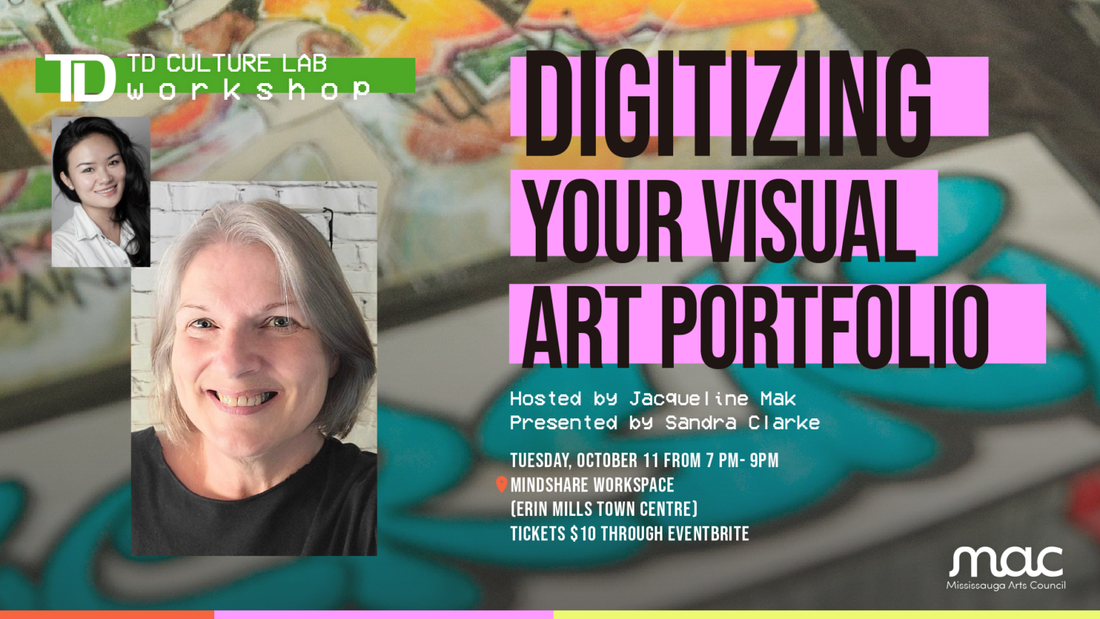
Summer 2022 Rails End Gallery and Arts Centre
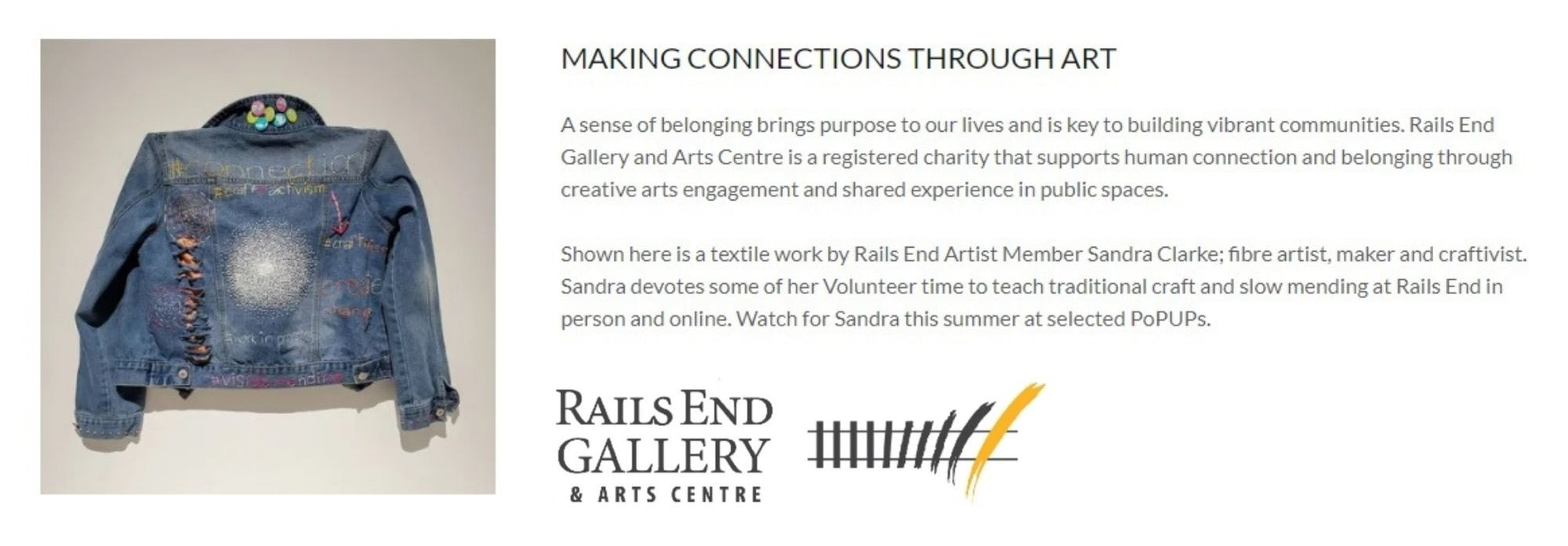
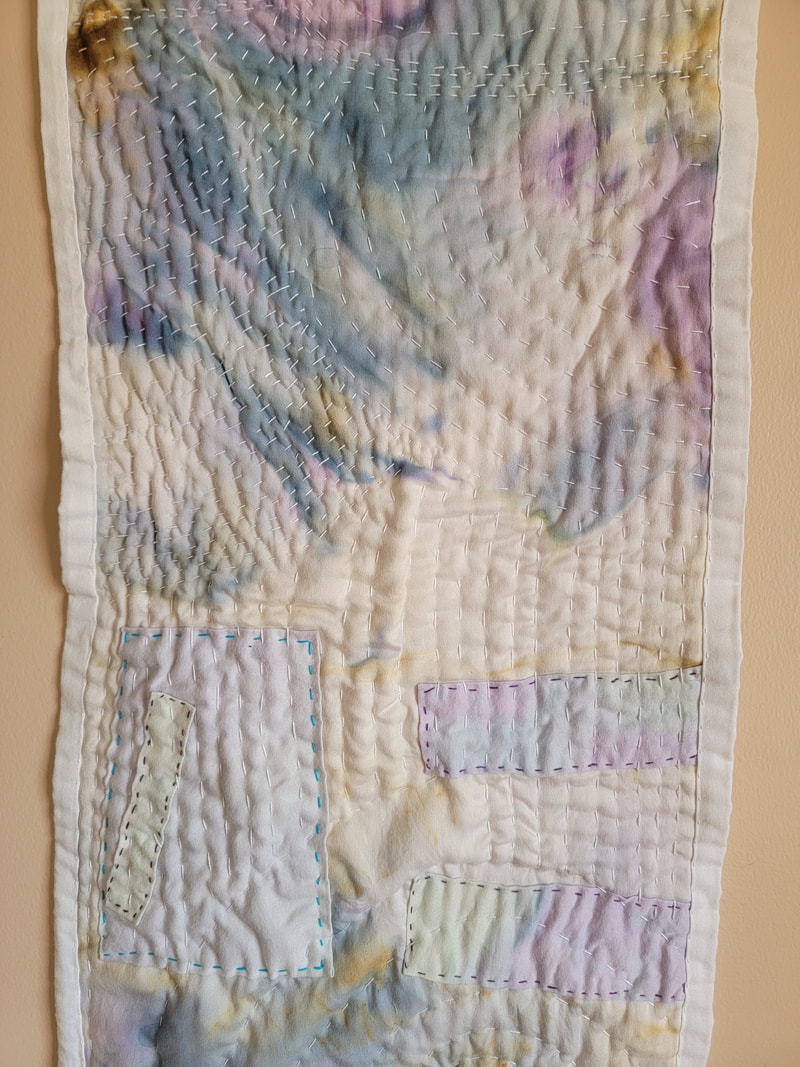
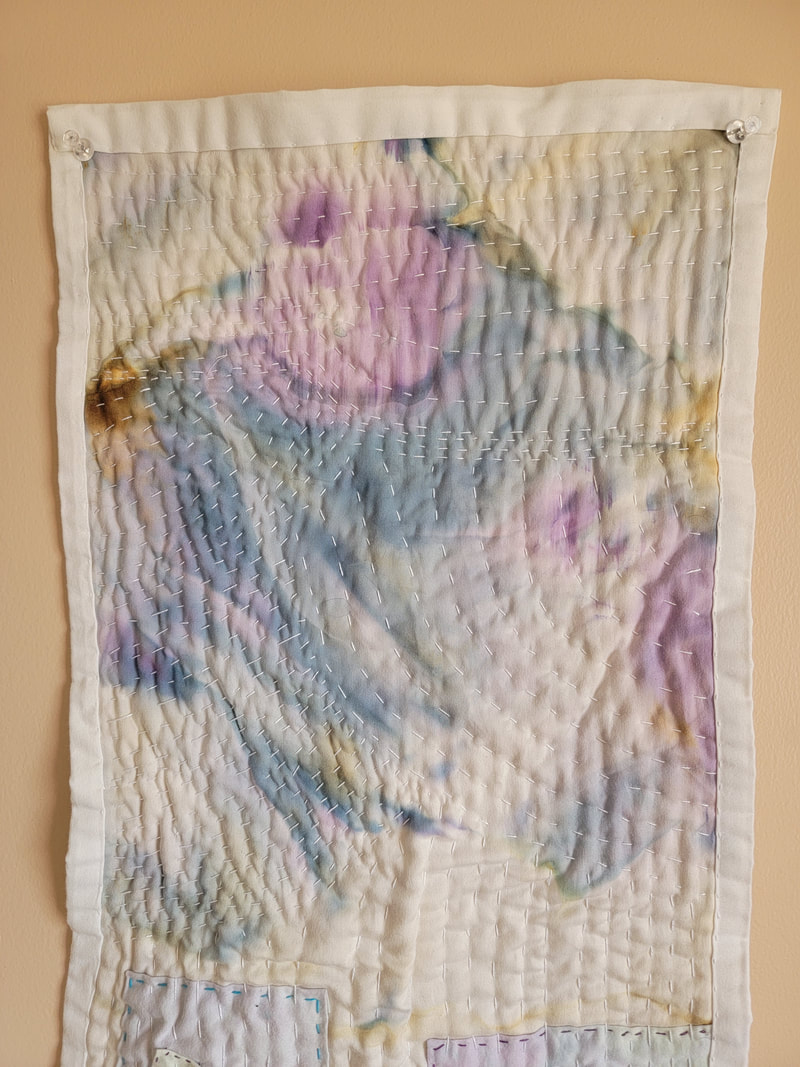
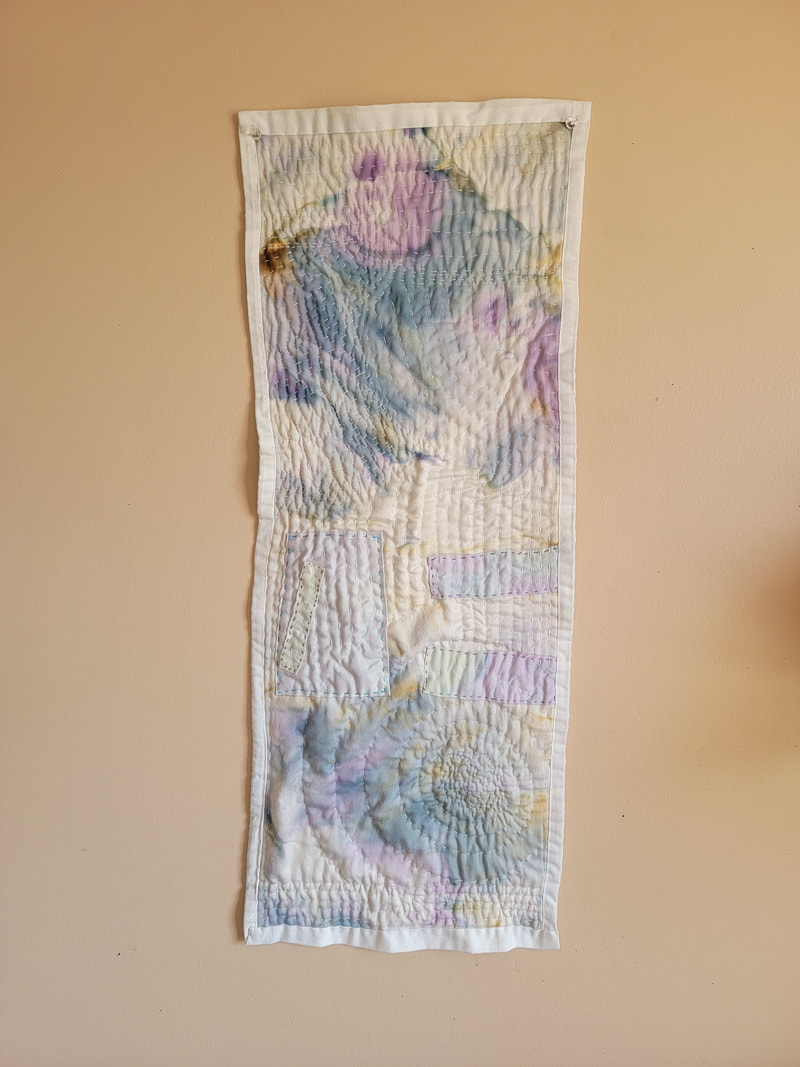
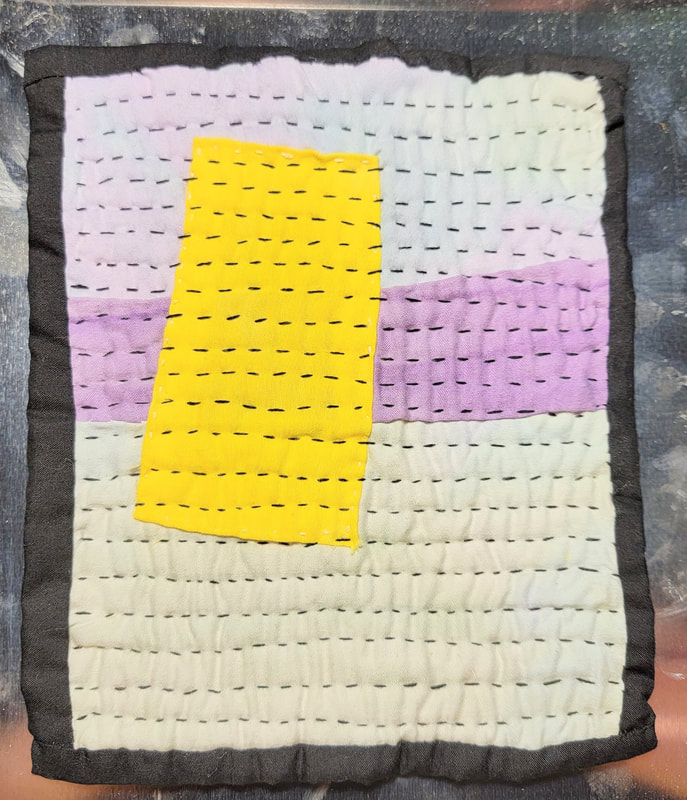
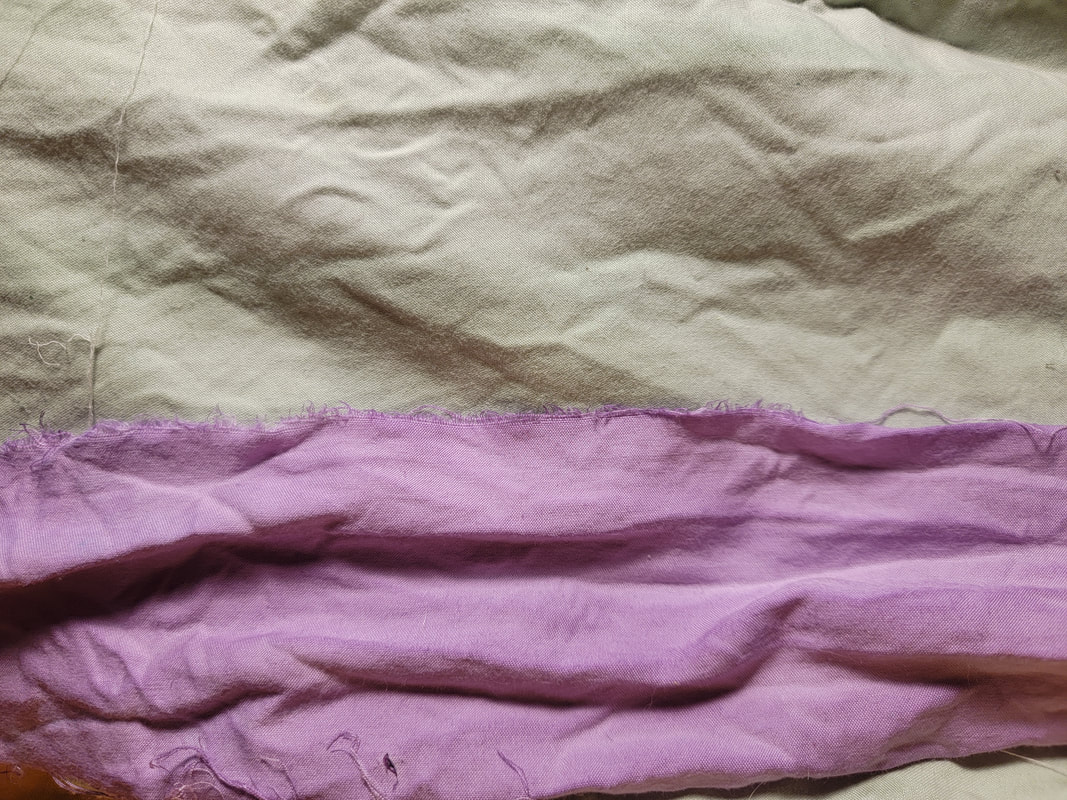
Fabric • naturally dyed with rusted items
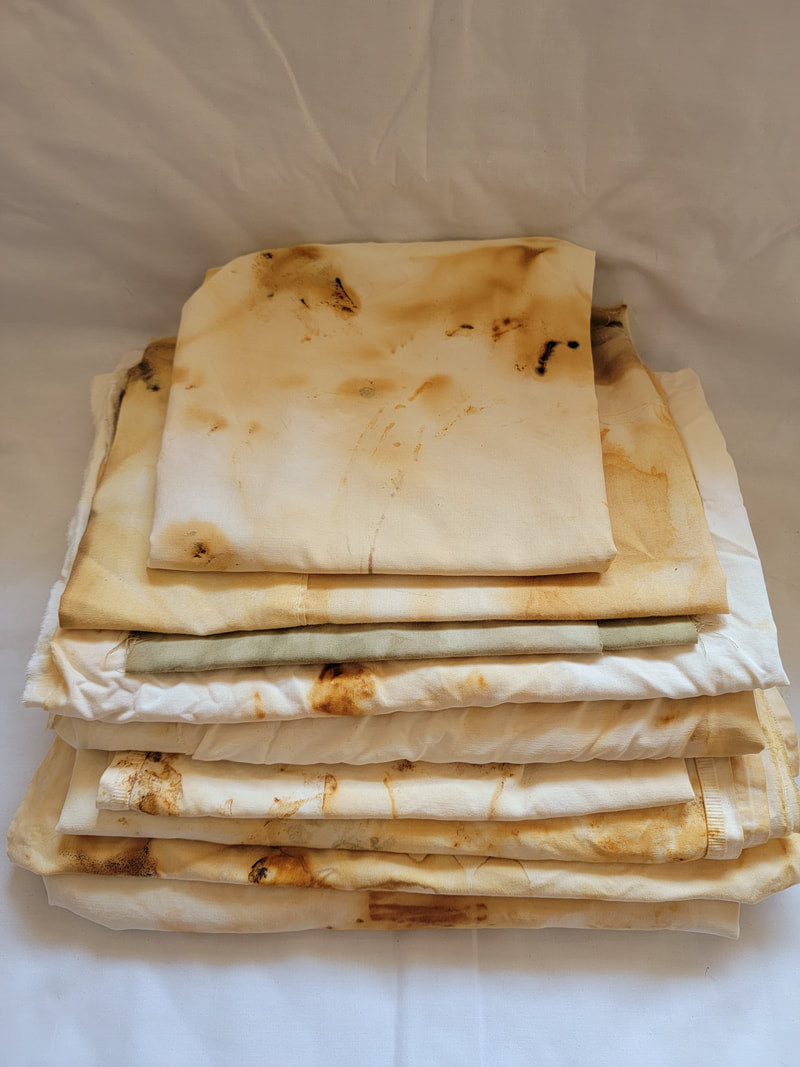
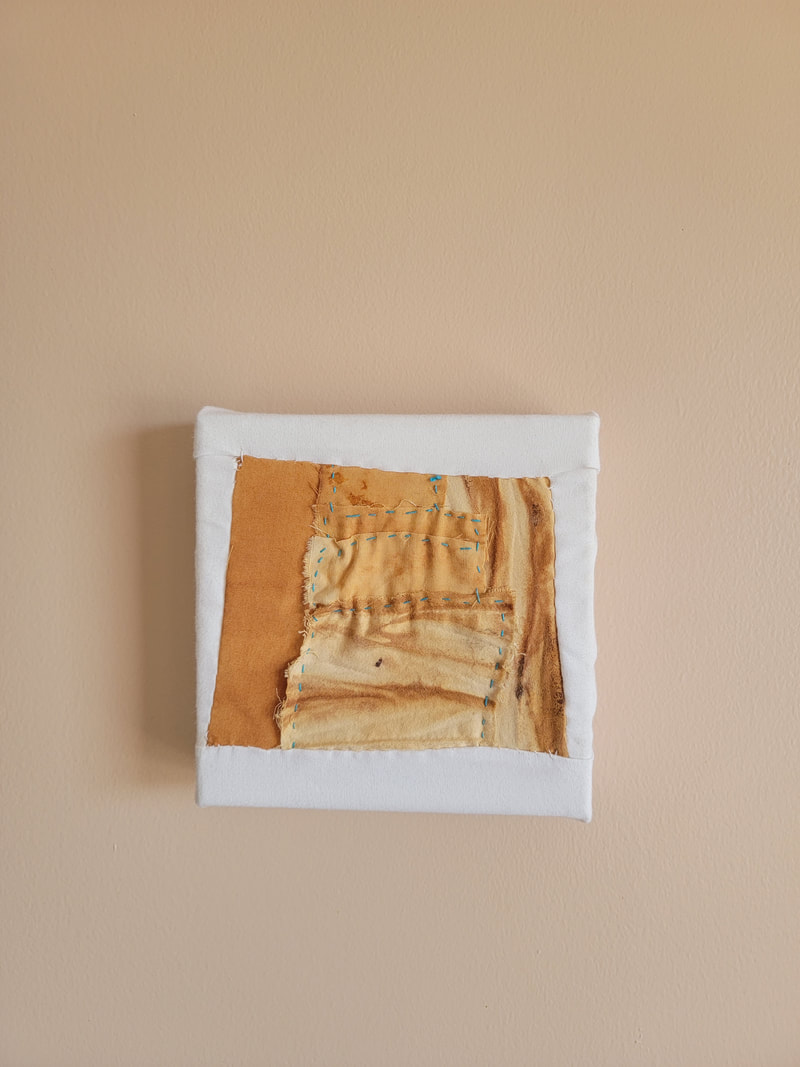
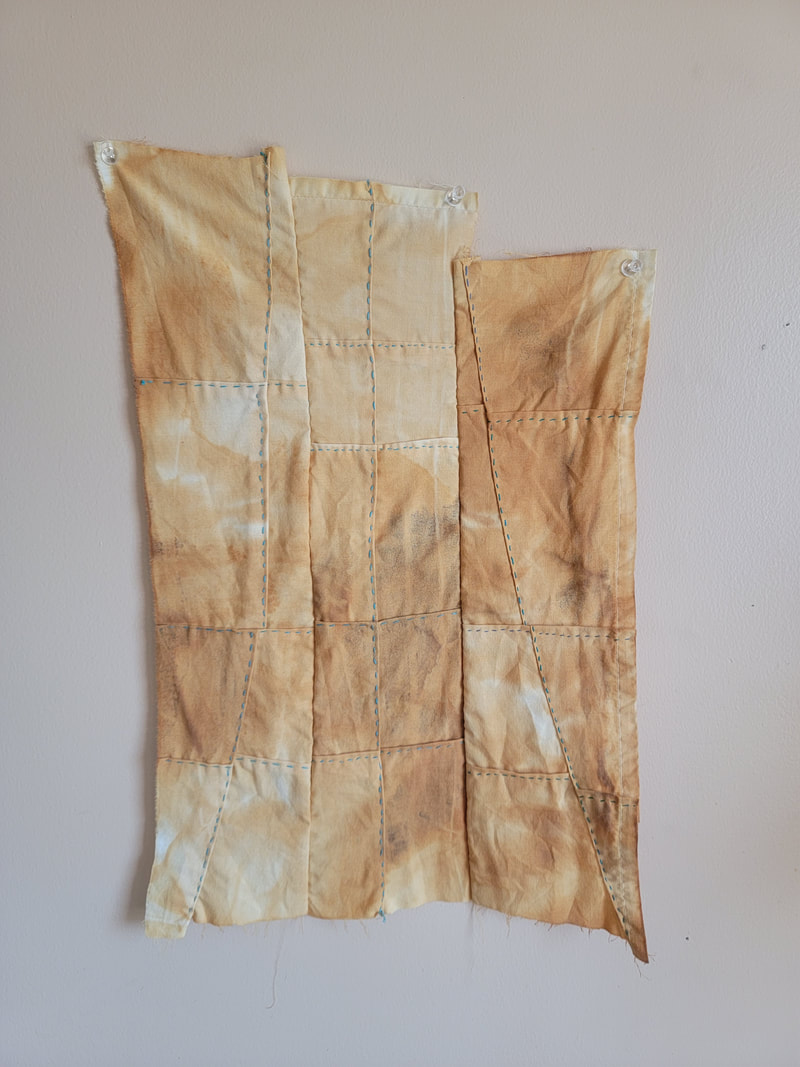
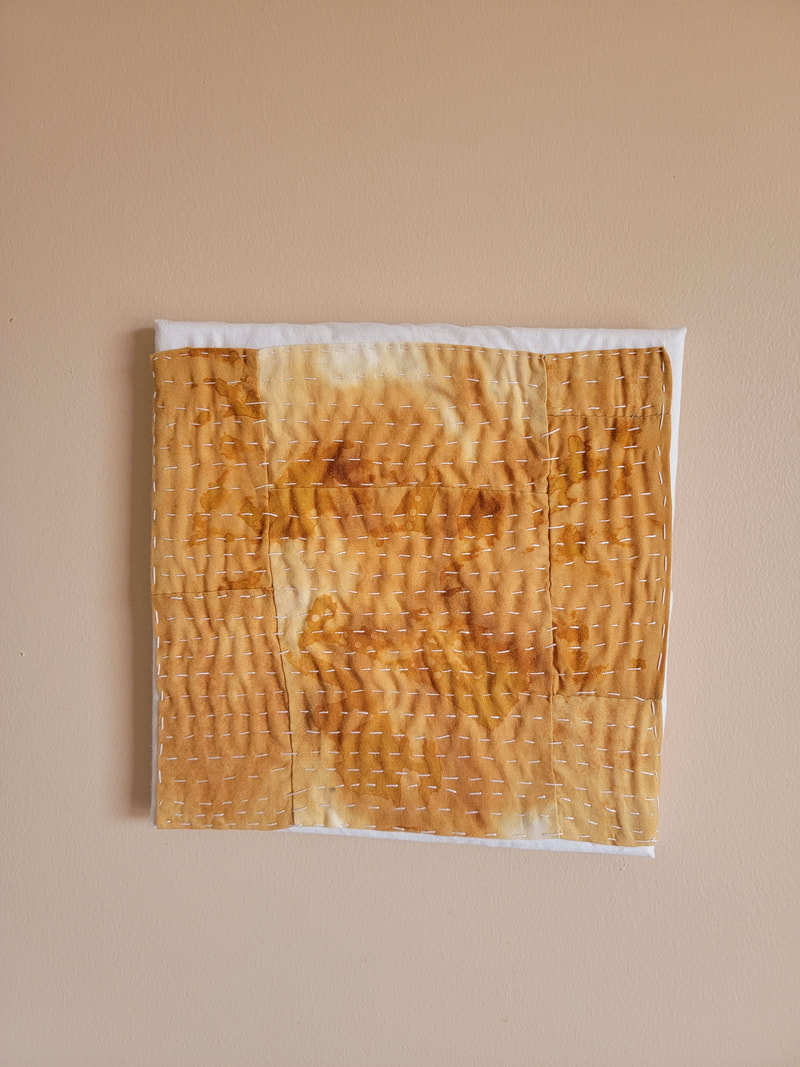
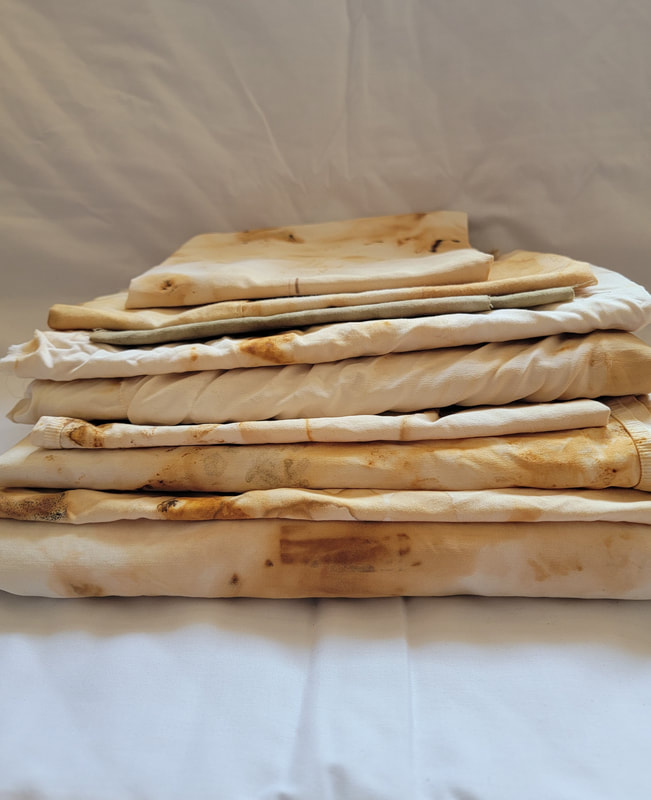
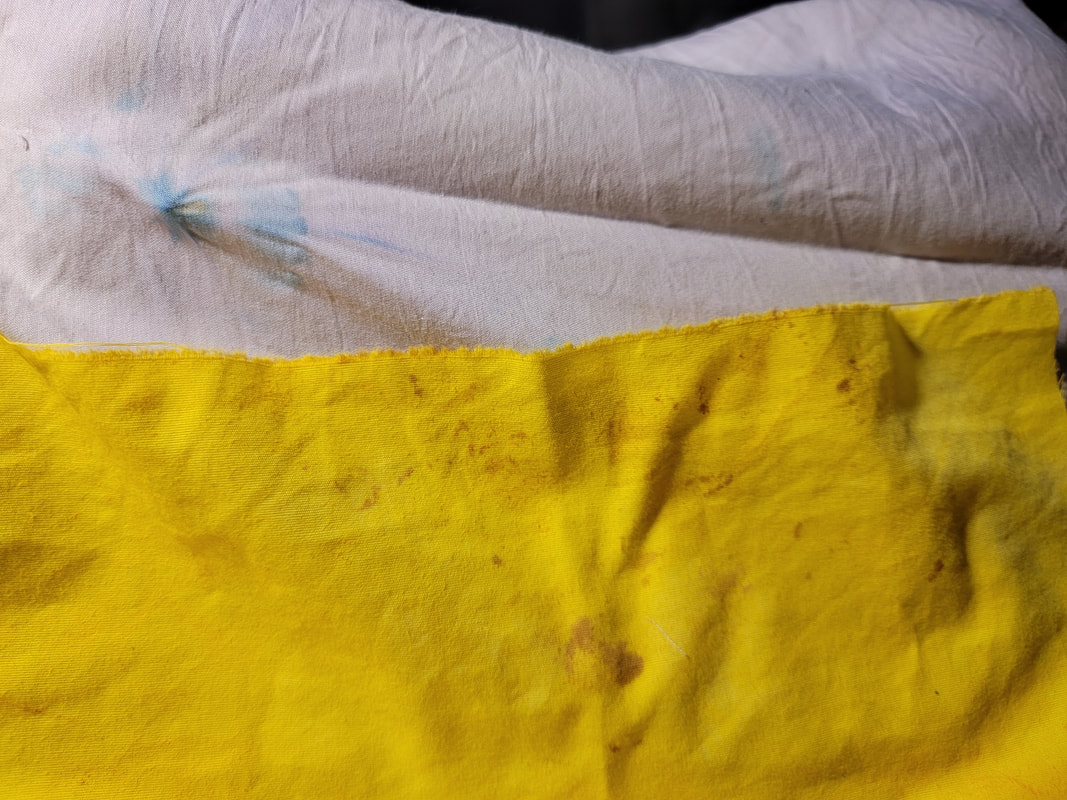
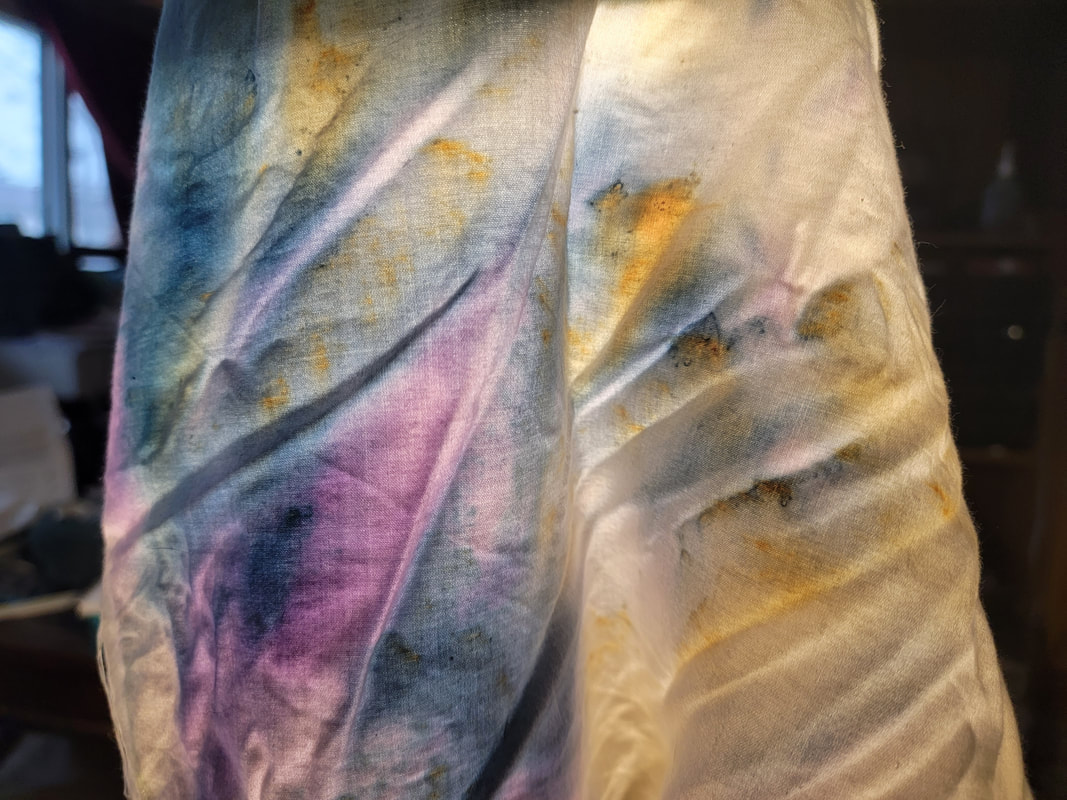
Fabric • naturally dyed with kitchen scraps
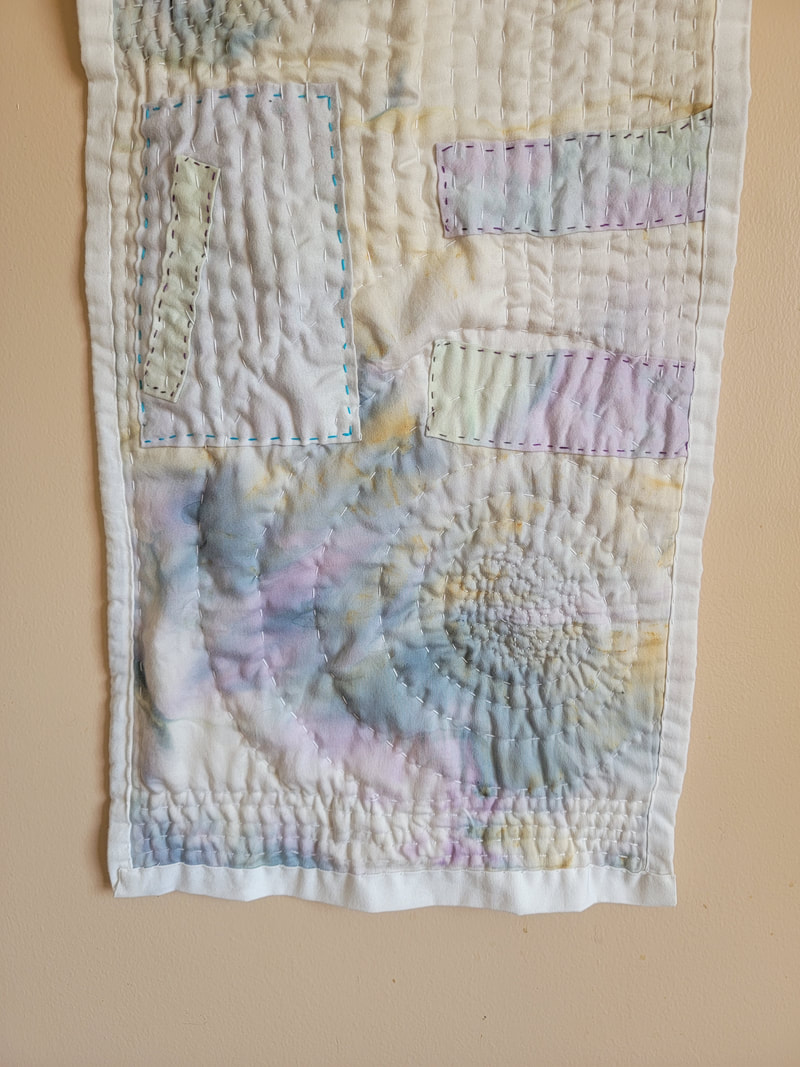
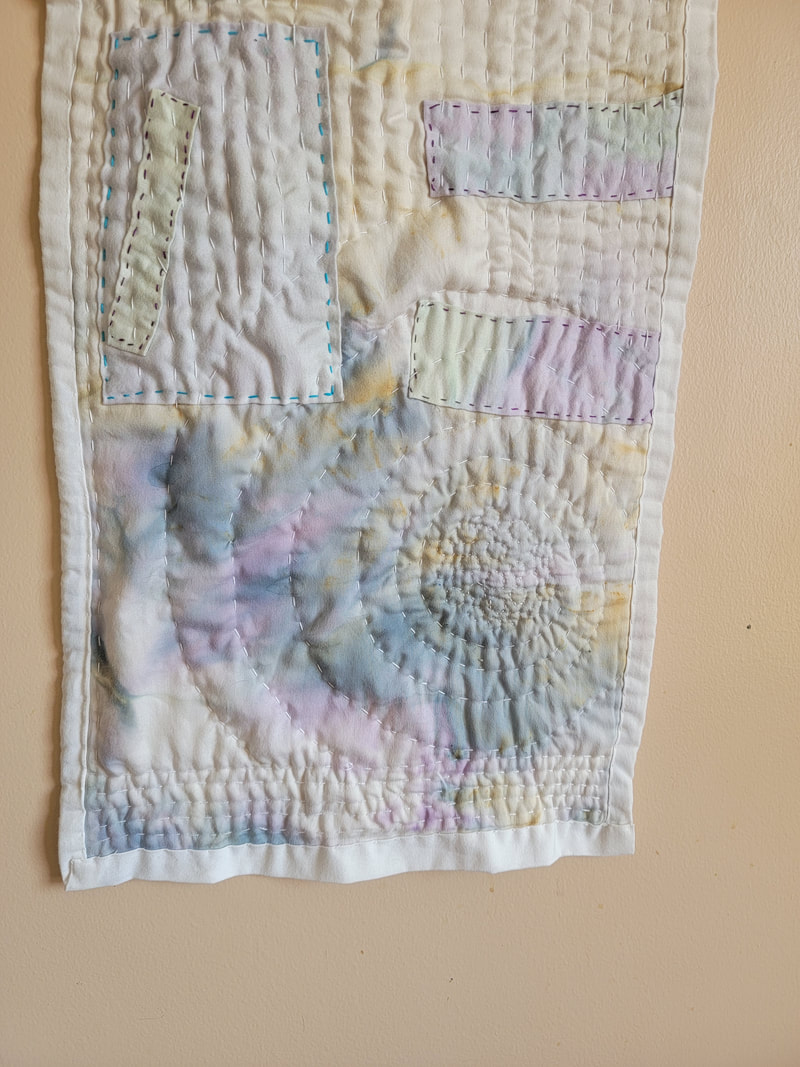

2021
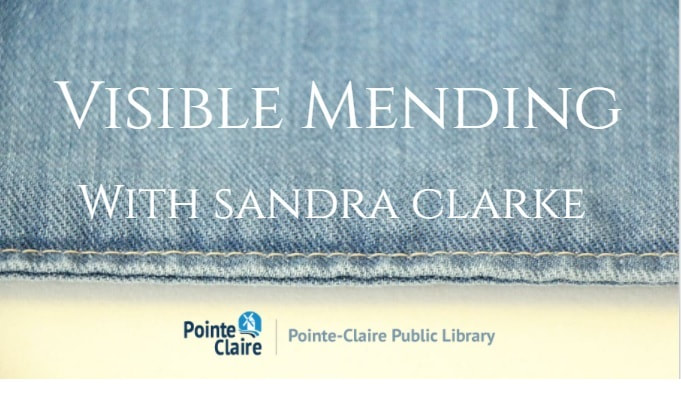
Visible Mending Workshop • Pointe Claire Library
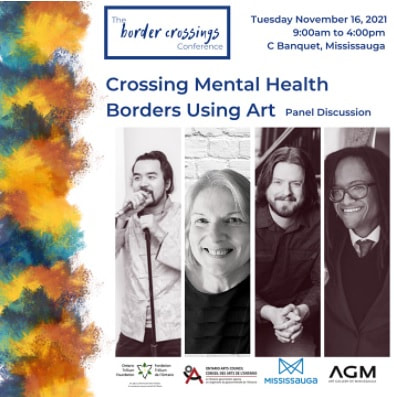
The Border Crossings Conference November 16, 2021
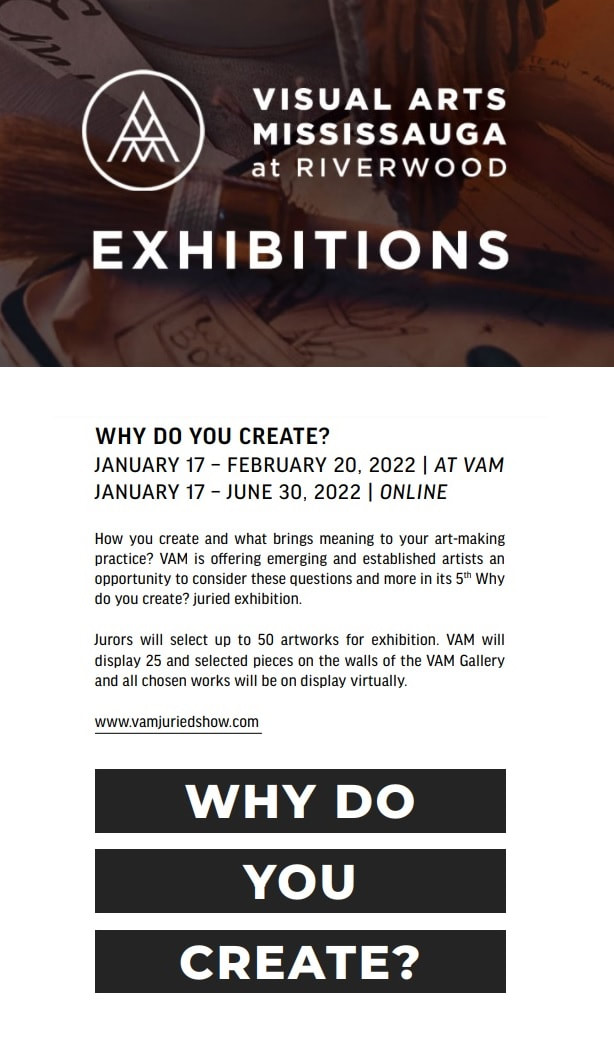
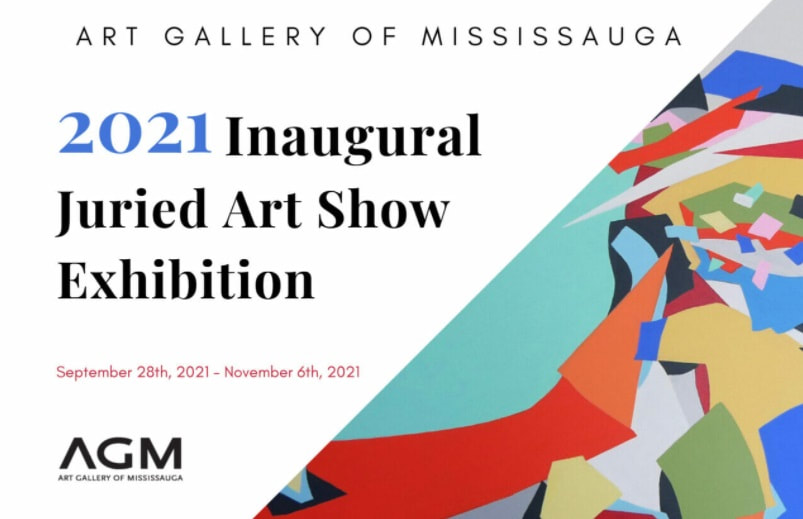
2021 Art Gallery of Mississauga Juried Show
Sandra Clarke • Winner of the Curator's Award.
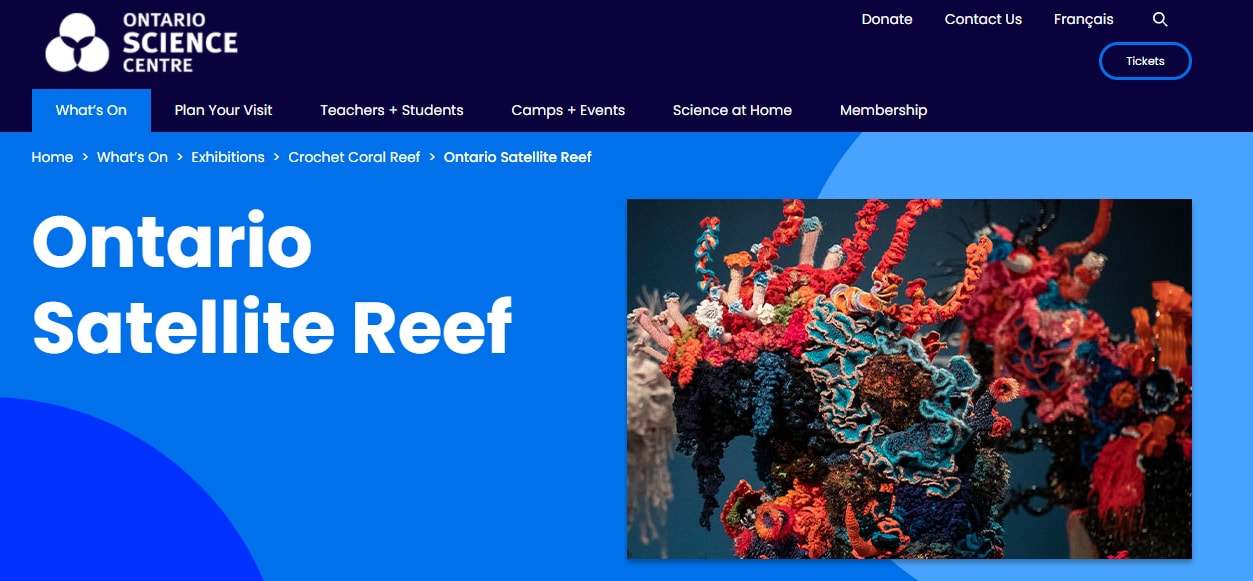
2021 Ontario Science Centre Satellite Coral Reef Project
2021 August Craftivism Events at Rails End Gallery & Art Centre in Haliburton, Ontario
Make your own tiny Craftivist banner or a fast fashion rebel clothing patch: noon to 3 pm Tuesday, August 3rd, 2021
CRAFTIVISM MANIFESTO
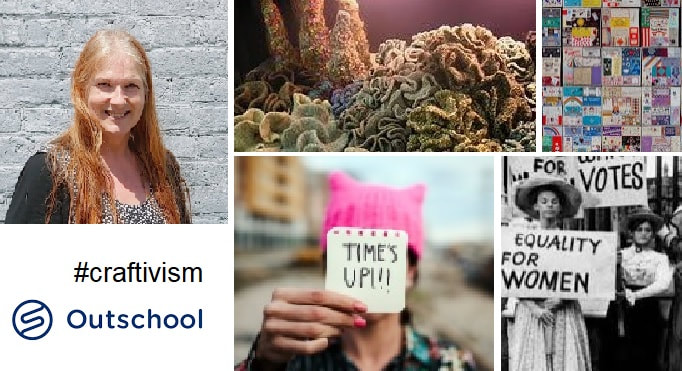
A craftivist is anyone who uses their craft to help the greater good. Your craft is your voice. Craftivism is about raising consciousness, creating a better world stitch by stitch, and things made by hand, by a person. It's also about sharing ideas with others in a way that is welcoming, not dividing, and celebrating traditional skills in new ways. As well as remembering and respecting the makers that came before us, adding to the dialogue and leaving something for the next generations of craftivists. Craftivism is about creating wider conversations about uncomfortable social issues. A craftivist is anyone who uses their craft to help the greater good or in resistance to a greater societal ill. A single individual crafting can make a difference. Or they can craft together and benefit from the fellowship of other crafters. Craftivists open minds and hearts. It's about connecting through and with craft and creating a more compassionate community. Craftivists are makers, hackers, menders and modifiers of material things. My craftivism can be different from your craftivism and that's okay. Craftivism encourages people to challenge injustice and find creative solutions to conflict. Craftivism does not expect you to come with skills but with willingness. Craft is often seen as a benign, passive and (predominantly female) domestic pastime. By taking these stereotypes and subverting them, craftivists are making craft a useful tool of peaceful, proactive and political protest. Craftivism is a way to make big issues tangible, so that we can build a better world together. Craftivism is about reclaiming the slow process of creating by hand, with thought, with purpose and with love. Because activism, whether through craft or any other means, is done by individuals, not machines. Craftivism is a tool to instantly create a small part of the warmer, friendlier and more colorful world we hope to see in the future.
This manifesto was written by Mary Callahan Baumstark, Ele Carpenter, Joanna Davies, Tamara Goo derham, Betsy Greer, Bridget Harvey, Rebecca Marsh, Manna Marvel, Ari Miller, Iris Nectar, Abi Niel sen, Elin Poppelin and Cat Varvis.
A craftivist is anyone who uses their craft to help the greater good. Your craft is your voice. Craftivism is about raising consciousness, creating a better world stitch by stitch, and things made by hand, by a person. It's also about sharing ideas with others in a way that is welcoming, not dividing, and celebrating traditional skills in new ways. As well as remembering and respecting the makers that came before us, adding to the dialogue and leaving something for the next generations of craftivists. Craftivism is about creating wider conversations about uncomfortable social issues. A craftivist is anyone who uses their craft to help the greater good or in resistance to a greater societal ill. A single individual crafting can make a difference. Or they can craft together and benefit from the fellowship of other crafters. Craftivists open minds and hearts. It's about connecting through and with craft and creating a more compassionate community. Craftivists are makers, hackers, menders and modifiers of material things. My craftivism can be different from your craftivism and that's okay. Craftivism encourages people to challenge injustice and find creative solutions to conflict. Craftivism does not expect you to come with skills but with willingness. Craft is often seen as a benign, passive and (predominantly female) domestic pastime. By taking these stereotypes and subverting them, craftivists are making craft a useful tool of peaceful, proactive and political protest. Craftivism is a way to make big issues tangible, so that we can build a better world together. Craftivism is about reclaiming the slow process of creating by hand, with thought, with purpose and with love. Because activism, whether through craft or any other means, is done by individuals, not machines. Craftivism is a tool to instantly create a small part of the warmer, friendlier and more colorful world we hope to see in the future.
This manifesto was written by Mary Callahan Baumstark, Ele Carpenter, Joanna Davies, Tamara Goo derham, Betsy Greer, Bridget Harvey, Rebecca Marsh, Manna Marvel, Ari Miller, Iris Nectar, Abi Niel sen, Elin Poppelin and Cat Varvis.
Craftivism Project
#FastFashionRebellion
#FastFashionRebel
#SlowFashionMovement
#CraftivismCanada
#VisibleMending
Fast fashion refers to low-priced clothing made overseas using substandard materials intended to make consumers buy frequently. Essentially, disposable clothing.
It's hard to resist that $5 t-shirt -- especially while living on a budget.
The problem is that the billion dollar fashion industry misleads us about the true cost of that $5 t-shirt.
The negative impact on our ecosystem has already caught up to us by polluting water, air, and soil. Synthetic materials are by-products of petroleum and are non-biodegradable. Synthetic products take a long time to decompose, creating long-term pollution + accumulate in landfills. Natural fibers, like cotton, are grown using pesticides harming pollinating insects. Fast fashion displaces animals by over-using + polluting their water + food sources.
Overseas manufacturers employ mostly women who pay the price by working in poor working conditions at subpar wages.
The fast fashion industry literally killed people in 2013 with the collapse of the Dhaka Garment Factory. 1,134 people lost their lives.
What can you do?
#FastFashionRebellion
#FastFashionRebel
#SlowFashionMovement
#CraftivismCanada
#VisibleMending
Fast fashion refers to low-priced clothing made overseas using substandard materials intended to make consumers buy frequently. Essentially, disposable clothing.
It's hard to resist that $5 t-shirt -- especially while living on a budget.
The problem is that the billion dollar fashion industry misleads us about the true cost of that $5 t-shirt.
The negative impact on our ecosystem has already caught up to us by polluting water, air, and soil. Synthetic materials are by-products of petroleum and are non-biodegradable. Synthetic products take a long time to decompose, creating long-term pollution + accumulate in landfills. Natural fibers, like cotton, are grown using pesticides harming pollinating insects. Fast fashion displaces animals by over-using + polluting their water + food sources.
Overseas manufacturers employ mostly women who pay the price by working in poor working conditions at subpar wages.
The fast fashion industry literally killed people in 2013 with the collapse of the Dhaka Garment Factory. 1,134 people lost their lives.
What can you do?
- Avoid buying fast fashion clothing as much as possible. Consider buying secondhand clothes. Often the quality is better than fast fashion garments + you get value for the money.
- Support local clothing designers + makers by purchasing and / or sharing their websites with friends + family.
- Take proper care of your garments so that they last longer.
- Repair garments -- create a trend by repairing your clothing with interesting embroidery stitches + patches. #VisibleMending
- Instead of tossing unwanted clothes in the bin, consider selling or donating them. Recycling programs can be misleading and should be the last resort. Repair, Reuse, Repurpose before Recycle.
- USE YOUR VOICE + spread the word about fast fashion.
Click here to read the Saturday, April 3rd, 2021 article about #Craftivism
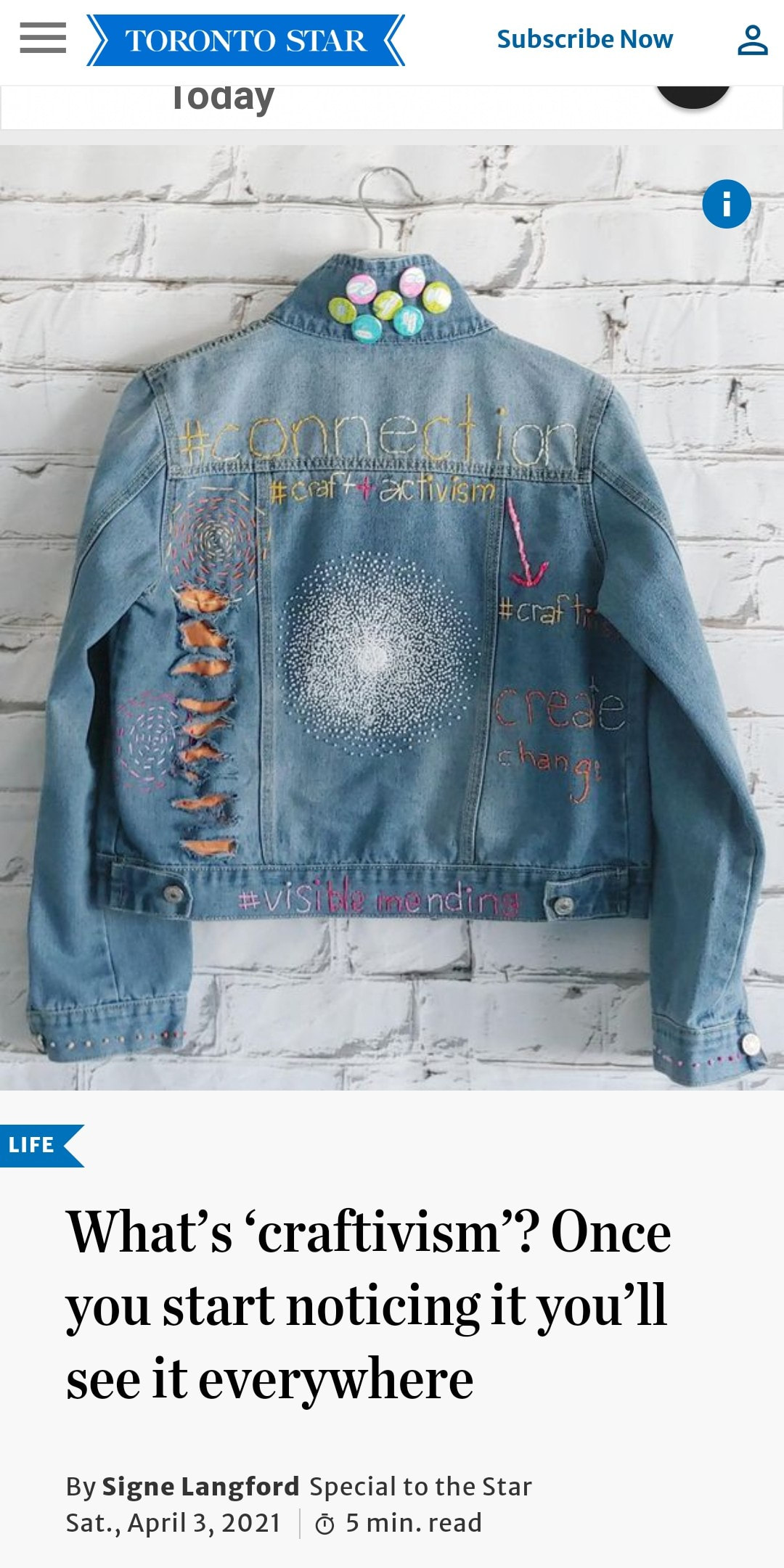
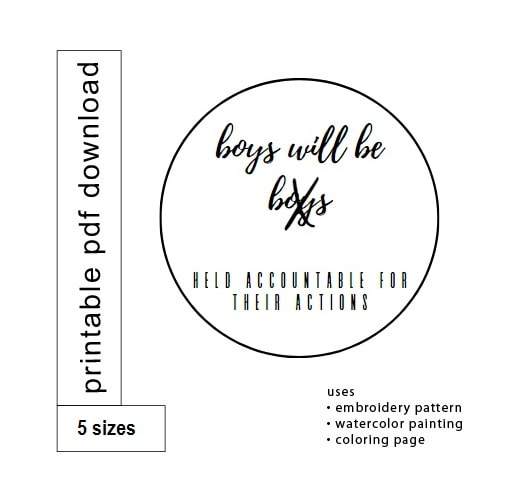
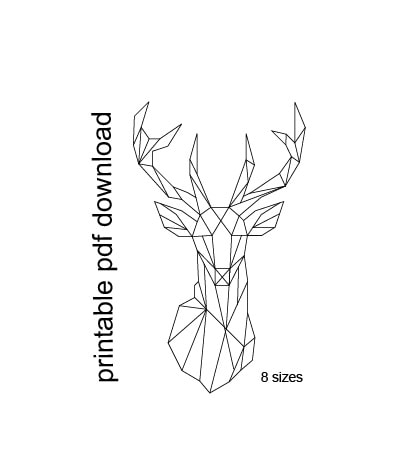
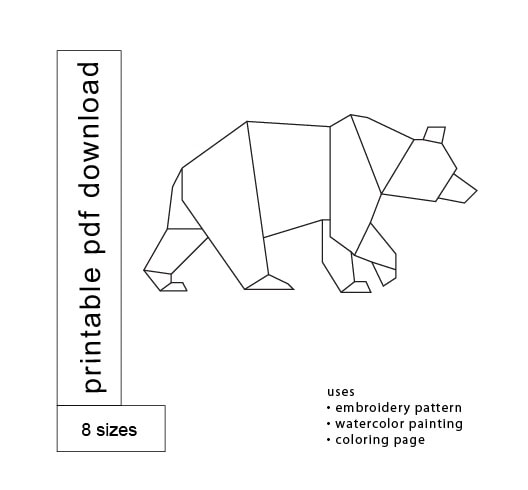
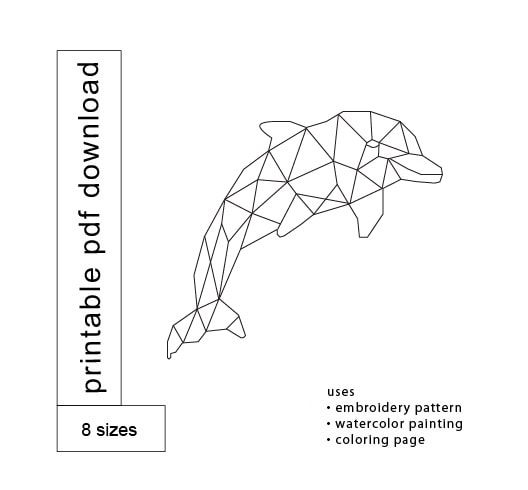
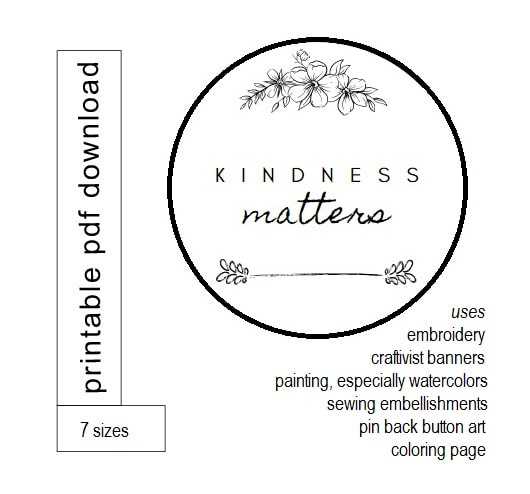
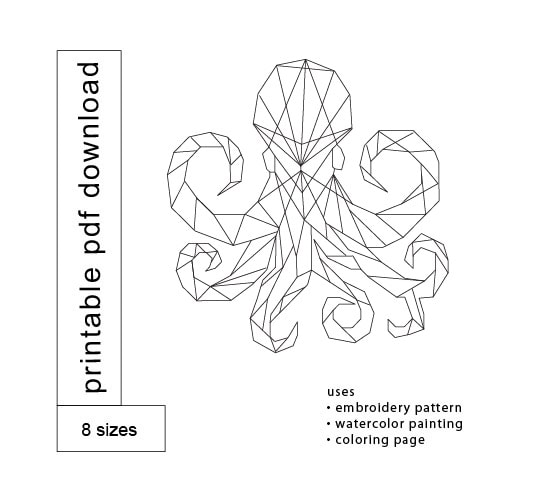
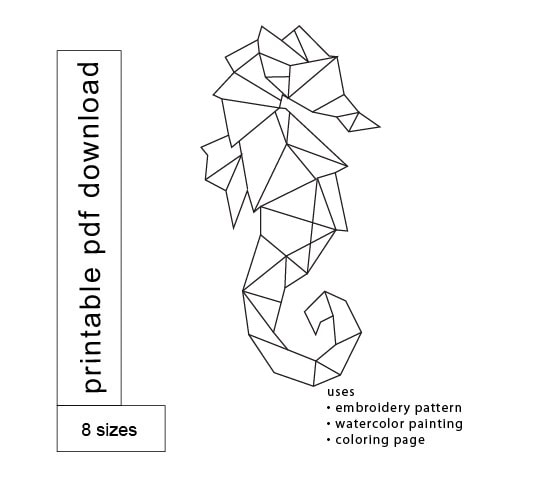
Craftivist Printables 2021
bio
Sandra Clarke, has been untangling skeins of yarn + making useful shiny things for over 30 years. Born in the colourful, celtic, Montreal neighbourhood of Griffintown, + educated in Montreal, New York, Winnipeg, Vancouver + Toronto, helped Sandra develop her eclectic style. Her textile + fibre arts + courses include; embroidery, weaving, spinning, sewing, felting + knitting. On the shiny arts side, she creates + teaches; fused glass, beaded trees of life, jewelry + button making. Her art can be seen regularly in boutiques, galleries, + online. Sandra's ecology themed colouring books can be found on Amazon + in her courses. Nature themes are also explored in Sandra's illustrations, both graphic + by hand. She teaches art + art business courses online, in galleries + schools. Sandra gives traditional arts a contemporary life while still retaining practicality + function. Fueled by the fast-fashion rebellion, visible mending + craftivism, Sandra's no-waste philosophy results in ethically made + thoughtfully re-fashioned textile art. Sandra lives with her husband + children dividing her time between her home in Mississauga, Ontario, Canada + her off-grid cabin-in-the-woods near Algonquin Park in Highlands East, Ontario.
Sandra Clarke, has been untangling skeins of yarn + making useful shiny things for over 30 years. Born in the colourful, celtic, Montreal neighbourhood of Griffintown, + educated in Montreal, New York, Winnipeg, Vancouver + Toronto, helped Sandra develop her eclectic style. Her textile + fibre arts + courses include; embroidery, weaving, spinning, sewing, felting + knitting. On the shiny arts side, she creates + teaches; fused glass, beaded trees of life, jewelry + button making. Her art can be seen regularly in boutiques, galleries, + online. Sandra's ecology themed colouring books can be found on Amazon + in her courses. Nature themes are also explored in Sandra's illustrations, both graphic + by hand. She teaches art + art business courses online, in galleries + schools. Sandra gives traditional arts a contemporary life while still retaining practicality + function. Fueled by the fast-fashion rebellion, visible mending + craftivism, Sandra's no-waste philosophy results in ethically made + thoughtfully re-fashioned textile art. Sandra lives with her husband + children dividing her time between her home in Mississauga, Ontario, Canada + her off-grid cabin-in-the-woods near Algonquin Park in Highlands East, Ontario.
2021 Projects